Information for Competitors
DARPA Lift Challenge Program Manager Phillip “Donna” Smith explains FAA processes. | More information on DVIDS
Source: DARPA | Tom Shortridge
Participating in an Advanced Aviation Test Program
The DARPA Lift Challenge taps into the core of American innovation: the ‘garage inventor’ spirit. Competitors must create a novel drone design that is both lightweight and powerful. The challenge prioritizes safety and regulatory compliance, requiring all participating individuals and teams to strictly adhere to Federal Aviation Administration (FAA) regulations.
As details are shared with teams selected for participation, we will post updates here.
Recent Updates
- July 9: Updated the Draft Rules and the weights of the compact and weight plate platform trackers.
- June 17: Updated the Platform Tracker section to include an antenna integration guidance update, tracker weight estimates, and communications/GPS antenna specifications and integration restrictions. DARPA is now allotting time for tracker integration to help competitors find optimal antenna placement per their design when at the competition.
- Guidance for flight verification submissions | Download
To help potential competitors prepare, this guide will walk you through everything from the technical requirements and course layout to what you can expect on competition day.
Safety and Sportsmanship
Before diving into the details, it’s important to cover the basics. All participants must follow the procedures presented here, along with all standard FAA rules and safety practices. It cannot be stressed enough: safety is the number one priority. Any behavior seen as unsafe, or any violation of the rules, could lead to disqualification. The goal is for this to be a challenging and rewarding experience, so everyone is expected to compete with sportsmanship and in good faith.
Your Aircraft and Crew
This Challenge is designed for Vertical Takeoff and Landing (VTOL) vehicles, meaning your unmanned aircraft system (UAS) must be able to lift off and land vertically without a runway or external launch gear.
Your flight crew is also critical. Each team needs to designate one Remote Pilot in Command (RPIC) who holds a valid FAA Part 107 certificate. These certifications will be reviewed by DARPA beforehand and physically verified by the lane coordinator on competition day. The RPIC can also have one assistant with them in the designated competition area.
On top of that, all flight operations must follow standard FAA regulations. For larger systems over 55 lbs., this includes having an exemption on file. We are currently working with the FAA to have DARPA hold the exemption, which will be distributed to teams that have applied to compete. The aircraft must also be equipped with and compliant with all FAA Remote Identification (RID) regulations.
The Competition Course
Each team gets an exclusive 100-foot-wide flight lane for all its flight window operations. For safety, each lane is enclosed by a digital geofence. Think of your flight lane as having a "stoplight" system to keep you on track.
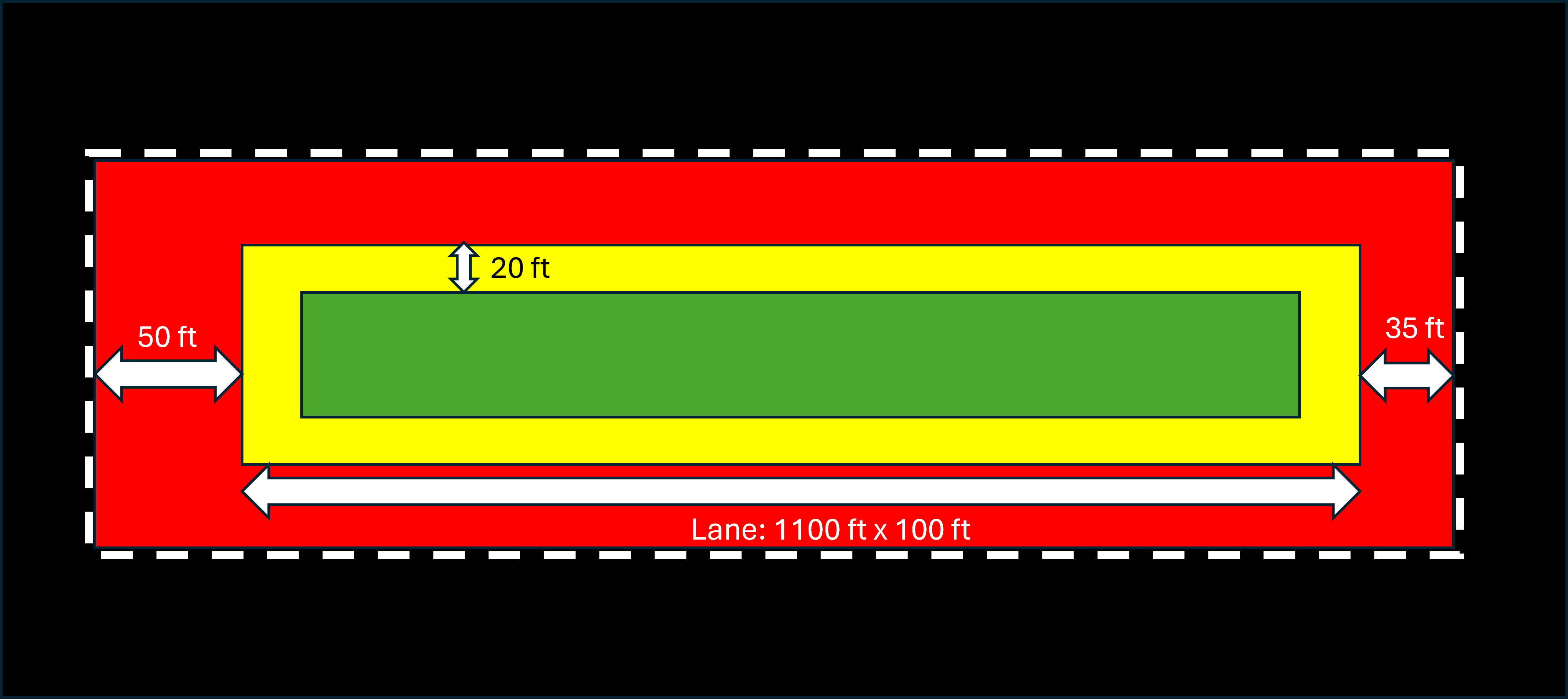
This graphic shows Lift Challenge lane boundaries as described in The Competition Course Section. Source: DARPA
The center of the lane is your Green Zone, a 60-foot-wide safety corridor. As long as you're flying here, everything is nominal and you're on the optimal path. Drifting toward the edges of the lane will push you into the Yellow Zone, a 20-foot buffer that serves as a warning track. Entering this area won't penalize you, but it will trigger a visual warning on the RPIC's display, letting you know you're getting close to the boundary.
If you stray further and cross into the Red Zone — the area just outside the flight lane — your scoring attempt for that run is immediately over. This constitutes a boundary excursion, and your required action is to safely pilot the aircraft back into the lane and return to the starting line. If you have mission time left, your team can refuel, re-weigh, and begin a new attempt.
The most critical boundary is the Black Zone, which begins the moment your aircraft breaches the site's overall geofence perimeter. A geofence breach is a serious safety event that triggers a mandatory emergency protocol. Your immediate and primary responsibility as the pilot is to try and guide the aircraft back inside the flight box. If the aircraft is unresponsive, you must land it immediately, wherever it is. And if you can't land it and it continues to travel away from the operational area, you must activate the kill switch as a final resort to ensure site containment.
At the end of your lane are two key zones. First, a Preparation Box serves as a staging area to run final checks on your UAS. From there, you'll move into the Competition Box, the official zone where all takeoffs, landings, and payload deposits happen. Only three people are allowed in the Competition Box during a flight: the RPIC, the optional RPIC assistant, and the official Lane Coordinator. Inside this box, you'll see two marked circles on the ground, each with a 5-foot radius: one for your UAS Takeoff and Landing and one for the Payload Deposit.
The Payload
The payload is specific: Barbell Standard brand cast iron Olympic plates, which will be provided by DARPA to ensure consistency. To get a qualifying score, a flight must carry a minimum of 110 lbs. You'll need to declare your payload weight before the weigh-in, and when assembling your payload, the rule is to use the largest plate denominations possible. The plates themselves cannot be modified in any way.
How you attach the payload is up to you, but the mechanism must be secure and safe. It’s important to know that the weight of your attachment system counts as part of the aircraft's weight, not as part of the payload weight. The attachment gear must also stay on the aircraft for the entire flight. Lastly, all plates must be held at a single point on the UAS; spreading the weight out is not allowed.
Competition Day: Scheduling and Check-In
So, how is flight time assigned? It’s simple: the sooner you apply, the higher you are on the list to pick your preferred flight days.
Each team is assigned two 90-minute flight windows on separate days, one in the morning and one in the afternoon. This gives you several chances to post your best score. During your 90-minute block, you can make as many flight attempts as you can safely fit in. Your best score overall from either of your two windows will stand as your official score.
The schedule could change due to unforeseen events. Every effort will be made to accommodate teams and provide notice if things get shuffled. It's crucial to be on time—check-in with the lane coordinator is required within 15 minutes of your window's start time. Missing a window may mean forfeiting those attempts. If you have a valid reason to reschedule, get in touch with the event organizers, and they will do their best to accommodate you, but rescheduling is not guaranteed.
The Main Event: Pre-Flight and Execution
Before each flight attempt, you'll go through a quick pre-flight process in the Preparation Box. A DARPA representative will weigh your aircraft and payload on a certified scale and give the payload a quick look to ensure it’s set up safely.
Next, a small, government-provided tracker will be attached to either your payload stack or your aircraft, with the tracker weight counting as part of the payload weight; the tracker specs will be released before the event. As it currently stands, the government-provided tracker will have two options:
- The tracker will be similar dimensions to a 2.5-lb weight plate, collocated with the rest of the payload stack, or
- A compact package roughly 4”x4”x2” in size (weighing 2.5 lbs.) able to be reversibly attached to your aircraft. Each team will be able to select their desired tracker form factor that best suits their design. Your aircraft plus the government tracker will be weighed again to ensure fairness in scoring regardless of form factor selected. Your aircraft's own Remote ID will also be used for tracking when it's flying unloaded. This data helps confirm every flight is within the rules, and a display will show the pilot their tracking info and provide alerts if they stray off course. We also ask that you keep a flight log detailing the payload, flight time, and energy use for each attempt.
At the start of your official flight window, you will progress from the Preparation Box to your assigned flight lane and Competition Box, where the Lane Coordinator will ensure all your pre-flight checks are complete and give you the go ahead to prepare for flight. When it's time for your flight attempt, the run clock officially starts the second the payload lifts off the ground. Your mission is a 5-nautical-mile circuit, flown in loops. The first four miles are with the payload, and the final mile is without it (but still with the 2.5-lb tracker attached).
Your RPIC must always keep the aircraft in visual line of sight. Even with autonomous modes, a safety pilot must be ready to take manual control instantly. Your aircraft must also be self-sufficient, with no launch stands or tethers, though a manual engine start is acceptable.
Once airborne, climb to and hold 150 feet (with a +/- 50-foot margin for error). The ascent to that cruising altitude should be done quickly, within 0.5 nautical mile of the start/finish zone with the payload, and within 0.2 nautical mile without it. That altitude should be held until the pilot verbally announces to the Lane Coordinator they are beginning the descent. After 4 nautical miles, return to the landing zone to drop the payload. This must be a controlled release, with the payload or aircraft touching the ground before the plates are let go — no airdropping. (Plates being released from a landed aircraft and falling a short distance is not considered an “airdrop.”) After that, the final unloaded mile is flown before coming in for the final landing. The center of the UAS must land vertically within the designated 5-foot radius circle. The landing is considered successful only if the aircraft is ready to fly again without any repairs (beyond basic safety checks). Remember, the entire mission must be completed within 30 minutes.
If you make a mistake, you can head back to the start and try again if time allows. The Lane Coordinator will try to flag any infractions in real-time, but a post-flight data review might also uncover an issue. The Coordinator also has the authority to stop a flight at any time for safety reasons. If the stop was due to a team's error, any time lost is forfeited. If it was for an external issue, an effort will be made to credit that time back if possible. Any decision made by a coordinator can be appealed for a final ruling.
Finally, flights will only be conducted during daylight hours and in weather deemed safe by officials. That means no flights will start in the rain or if wind blows over 25 knots. If the inclement weather occurs mid-flight, the Lane Coordinator will assess the risk and make a judgment call. For momentary weather spikes, we will work on an “advantage-style” system as seen in sporting events, where the Lane Coordinator decides whether it is safe for a team to continue flying and post a score. (e.g., if you are almost done with a run and the wind spikes above 25 knots with no safety effects, you will be allowed to continue and post your score).
Scoring, Safety, and Fair Play
Scoring comes down to a simple ratio, your Maximum Payload Weight divided by your Aircraft's Weight. The highest payload-to-weight ratio wins. In the event of a tie, the team with the fastest time will be declared the winner.
Every team needs a designated RPIC who performs a thorough pre-flight inspection with a DARPA official present before every flight. You must also have your emergency procedures planned out, an easily accessible soft or hard "kill switch" on your UAS and provide proof of FAA aircraft certification before you can fly.
If you believe another team has broken the rules, you can file an official protest within 24 hours of the alleged violation. DARPA will investigate and make a final decision.
Summary of Changes
1.0 General Rules
2.0 Team Requirements
3.0 Aircraft Requirements
4.0 Payload Requirements
5.0 Scoring
6.0 Safety Requirement
7.0 Protest Procedure
Last updated: July 9, 2026
Summary of Changes
Since the original posting on Oct. 28, 2025, the following changes have been made to streamline Challenge requirements.
Please visit the About section for additional course details and competition timeline and the Frequently Asked Questions (FAQs) for additional clarifications.
| 2026 | Summary of Changes |
| July 9 |
|
| July 2 |
|
| March 26 |
|
| January 27 |
|
1.0 General Rules
1.1 Eligibility: The competition is open to all teams who have applied for the DARPA Lift Challenge and meet the eligibility requirements.
1.1.1 Application and participation is open to individuals who are U.S. citizens or U.S. permanent residents (Green Card holders), representing only U.S. entities (e.g., companies, academic institutions), and government employees (civilian and military).
1.1.1.1 Non-U.S. individuals and organizations may participate as team members but must have a U.S. citizen or permanent resident as the applicant and team representative.
1.1.2 Application and participation is open to U.S. government entities (i.e. Federally Funded Research and Development Centers (FFRDCs), University Affiliated Research Centers (UARCs), government agencies/military institutions).
1.1.2.1 Teams from U.S. government entities may be eligible to participate provided that no government funds were previously used in the development of their design.
1.1.3 The following are eligible to participate but ineligible to receive prize money:
1.1.3.1 Individuals and non-U.S. government entities receiving funding or collaborating with DARPA on activities related to the Challenge.
1.1.3.2 Teams from U.S. government entities that are participating in their official capacity, or federal employees acting within the scope of their federal employment are ineligible to receive the award in their personal or individual capacities. Any award won by such participants must either be officially accepted by their employer or forfeited.
1.1.4 The following are ineligible applicants and participants:
1.1.4.1 DARPA government employees and support contractors, including their spouses, dependents, and members of their household.
1.1.4.2 Citizens of countries on the Department of State’s International Traffic in Arms Regulations restricted list
1.1.5 To be eligible to win a monetary prize, a team representing an entity (e.g., company or academic institution) must be incorporated and maintain a primary place of business (e.g., located) in the United States. A team not representing an entity, must include a citizen or permanent resident of the United States. The winner will be required to provide a U.S. Taxpayer Identification Number (TIN) or a Social Security number (SSN) to receive the monetary prize. Information on how to obtain a TIN is available on the U.S. Internal Revenue Service website.
1.1.6 Team applicant definition: A team applicant is defined as one or more individuals, identified by a Social Security number (SSN) or Taxpayer Identification Number (TIN).
1.1.6.1 One aircraft design per team: Each team can submit only one aircraft design for evaluation. Teams may bring spare parts or identical copies of their aircraft model to the competition.
1.1.6.2 Multiple designs require separate teams: To submit multiple, distinct aircraft designs, you must apply as a separate team for each design.
1.1.6.3 No duplication to gain advantage: Teams or groups of teams connected through common members, funding sources, or organizational affiliation may not submit applications for multiple teams with the same design concept to gain additional flight windows or other competitive advantages. DARPA reserves the right to disqualify teams found to be in violation of this rule.
1.2 Compliance: All applicants must comply with these rules, as well as all applicable Federal Aviation Administration (FAA) regulations and safety standards.
1.3 Safety: Safety is paramount. Any unsafe behavior or violation of these rules will result in immediate disqualification.
1.4 Interpretation: DARPA reserves the right to interpret these rules and make decisions on any matters not specifically covered herein. All DARPA decisions are final.
1.5 Amendments: DARPA reserves the right to amend these rules at any time. Any amendments will be communicated, in writing, to all applicants.
1.6 Good Faith: All applicants are expected to compete in good faith and to conduct themselves in a sportsmanlike manner.
1.7 Disqualification: DARPA reserves the right to immediately disqualify applicants from the Challenge for violating the rules and/or failing to compete in good faith.
1.8 Funding and reimbursement: DARPA is authorized under 10 USC § 4025 to conduct the Challenge and award cash prizes. However, DARPA will not provide funding or reimburse competitors any costs incurred to design, develop, construct, or operate the UAS.
1.8.1 Participation in the Challenge is voluntary, and teams assume responsibility for the costs and risks associated with developing and operating their systems.
1.8.2 While DARPA will not directly fund participating teams, the Challenge website will include a Contributor Portal to help teams connect with businesses, organizations, and individuals interested in providing voluntary support. Such support may include financial contributions, partnerships, or in-kind resources. This portal is intended to foster collaboration and resource sharing, and to help teams identify potential external support to overcome resource constraints in their Challenge efforts.
1.9 Invitation to Compete: Submission of required materials and meeting technical and safety milestones, including the May 15 flight test verification, are important steps for the competition process. However, meeting these milestones does not guarantee that a team will receive a formal invitation to compete in the Challenge in August 2026.
1.9.1 Milestone and deliverables are intended to allow teams to demonstrate progress toward a flight-ready system and to assist DARPA in evaluating readiness, safety considerations, and compliance with the Challenge Rules.
1.9.2 To be considered for an invitation to compete, teams must satisfy all eligibility, safety, and operational requirements described in the Rules and Competitor’s Guide. DARPA welcomes innovative technical approaches and appreciates the commitment teams make in pursuing advanced heavy-lift concepts. However, participation in the Challenge does not create any obligation for DARPA to invite a team to compete.
2.0 Team Requirements
2.1 Remote Pilot in Command (RPIC): Each team must designate an RPIC who holds a valid FAA Part 107 remote pilot certificate. These certifications must be provided to DARPA in order to be considered for invitation to compete, as well as verified with the DARPA Hangar Technician during Hangar checkouts.
2.2 Visual Observer (VO): Each team is allowed to designate a visual observer to accompany the RPIC behind the RPIC safety barrier adjacent to the flight lane.
3.0 Aircraft Requirements
3.1 Weight Limit: The Unmanned Aircraft System (UAS), including all components and fuel (excluding the payload), must weigh less than 55 pounds at the time of weigh-in.
3.2 Vertical Takeoff and Landing (VTOL): The UAS must take off and land vertically. No rolling or sliding starts.
3.3 Visual Line of Sight (VLOS): All flights must be conducted within visual line of sight of the remote pilot in command (RPIC).
3.4 Remote Identification (RID): The UAS must comply with all FAA Remote Identification (RID) requirements.
3.5 FAA compliance: All UAS operations must comply with applicable FAA regulations, including a commercial Part 107 (“Small Unmanned Aircraft Systems”) certification for operations <55 pounds. For operations above 55 pounds, we have worked with the FAA to have DARPA hold the PART 107 waiver which has been distributed to teams that have been selected to compete.
3.6 Construction: The UAS must be of sound design and construction, capable of safely carrying the specified payload.
3.7 Heavier than air: The UAS must be a heavier-than-air aircraft. The use of any lighter-than-air gases to provide buoyant lift is strictly prohibited. Teams may use chemically inert gases for subsystem actuation, safety inerting, and component rigidity, provided that there is no buoyant advantage and the gas is contained in components operating at pressures indicative of mechanical function.
3.8 Depleted power: You can jettison non-structural parts of the aircraft (i.e., expended energy storage), but they must have a slow decent and have hi-resolution marking for easy retrieval.
3.9 Flight Altitude: Once airborne, the UAS must climb to and maintain a cruising altitude of 150 feet, with a tolerance of +/- 50 feet.
3.9.1 Ascent/Descent Rate: The ascent to and descent from the designated cruising altitude must be completed within 0.5 nautical miles of the start/finish zone when carrying a payload, and within 0.2 nautical miles when flying without a payload.
4.0 Payload Requirements
4.1 Payload composition: The payload will consist exclusively of commercially available Barbell Standard brand cast iron Olympic barbell gym plates. Acceptable plate weights are: 2.5 pounds, 5 pounds, 10 pounds, 25 pounds, 35 pounds, and 45 pounds Plates will be circular and of standard dimensions for their weight. All plates for the Challenge will be provided by DARPA to ensure uniformity across the competition.
4.2 Payload weight: 110 pounds is the minimum payload weight to receive a qualifying score. Teams may attempt flights with any payload weight they choose, up to the maximum capacity of their UAS. The payload weight must be declared prior to weigh-in.
4.3 Plate combination: The payload must be assembled using the largest plate combinations available. For example, a 30-pound payload must consist of one 25 lb. plate and one 5 lb. plate (not six 5-pound plates).
4.4 Payload location: All plates comprising the payload must be co-located at a single point on the UAS. Distributed payloads or using the payload as structural reinforcements are not permitted.
4.5 Attachment method: Teams are free to use any method to attach the payload to the UAS (e.g., sling load, direct attachment). However, the attachment method must be secure and not pose a safety hazard. The attachment method will also be weighed in and will be considered part of the aircraft, not payload weight. The attachment method must remain attached or be reattached to the aircraft during the last nautical mile of the flight path.
4.6 No modifications: The gym plates themselves cannot be modified in any way (e.g., drilling holes, adding attachment points, etc.).
5.0 Scoring
5.1 Primary metric: The primary metric is the maximum payload weight divided by the aircraft weight (including power sources) that has successfully completed the flight course.
5.2 Tiebreaker: In the event of a tie, the team with the fastest time will be declared the winner.
5.3 Flight windows: Each team will be assigned two 90-minute flight windows during the evaluation period.
5.4 Flight attempts: Teams may complete as many successful attempts during their flight window as possible. The highest score of the flight window will be submitted for review at the end of each flight window. The highest overall score for a team will be maintained throughout the competition.
5.5 Scheduling changes: The flight schedule is subject to change due to unforeseen circumstances, such as teams dropping out of the competition or UAS crashes during testing. DARPA will make every effort to accommodate teams and provide reasonable notice of any scheduling changes.
5.6 Missed flight window: If a team is unable to fly during their scheduled flight window, they may forfeit their attempts. DARPA may, at its discretion, offer an alternate flight window, but this is not guaranteed. Team check-in will be required within 15 minutes of event window start time.
5.7 Rescheduling: Teams may contact DARPA to reschedule their window if they have a valid reason. DARPA will attempt to accommodate the request.
6.0 Safety Requirement
6.1 Emergency procedures: Teams must have established emergency procedures in place in the event of a UAS malfunction or another unforeseen event.
6.2 Kill switch: Teams must have a readily accessible "kill switch" that can immediately shut down the UAS in the event of an emergency. This can be a hard or soft kill switch.
6.2.1 UAS’s that fly beyond the specified boundaries of the competition are subject to active engagement by security and may be damaged or destroyed.
6.3 Insurance: While not mandatory, teams are strongly encouraged to obtain appropriate liability insurance to cover risks associated with flight operations, testing, transportation, and participation in the event.
6.4 Aircraft registration: Teams must provide proof of FAA DroneZone registration to a DARPA representative during Hangar checks.
7.0 Protest Procedure
7.1 Filing a protest: Any team may file a protest if they believe that another team has not followed these procedures.
7.2 Protest deadline: Protests must be filed within 24 hours of the alleged violation.
7.3 Protest resolution: DARPA will investigate all protests and make a final written determination.
Updated on July 9, 2026
- The weight of the tracker is added to your payload weight and contributes to your final payload to weight ratio.
- Must remain with the aircraft during the final unloaded portion of the course.
Design 1 – Compact Tracker (Update)
- Shape:
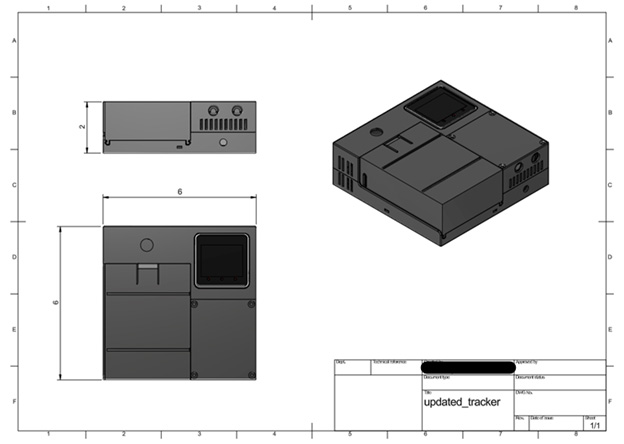
- Dimensions: 6" x 6" x 2"
- Weight
- Estimated 1.86 lbs.
- Note: A single bar weight (~.45 lbs.) will be available to attach to the compact tracker to increase the total Compact Tracker weight to 2.31 lbs.
- Attachment Points:
- Ziplock attachment points on all four sides of the tracker
- Twist Lock:
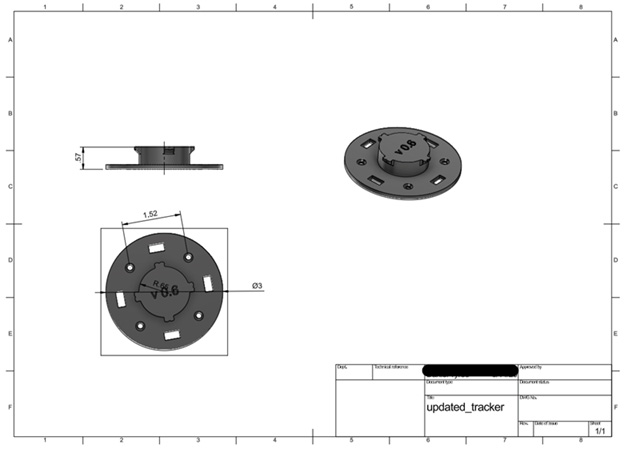
Design 2 – Olympic-Style Weight Plate Tracker
- Shape:
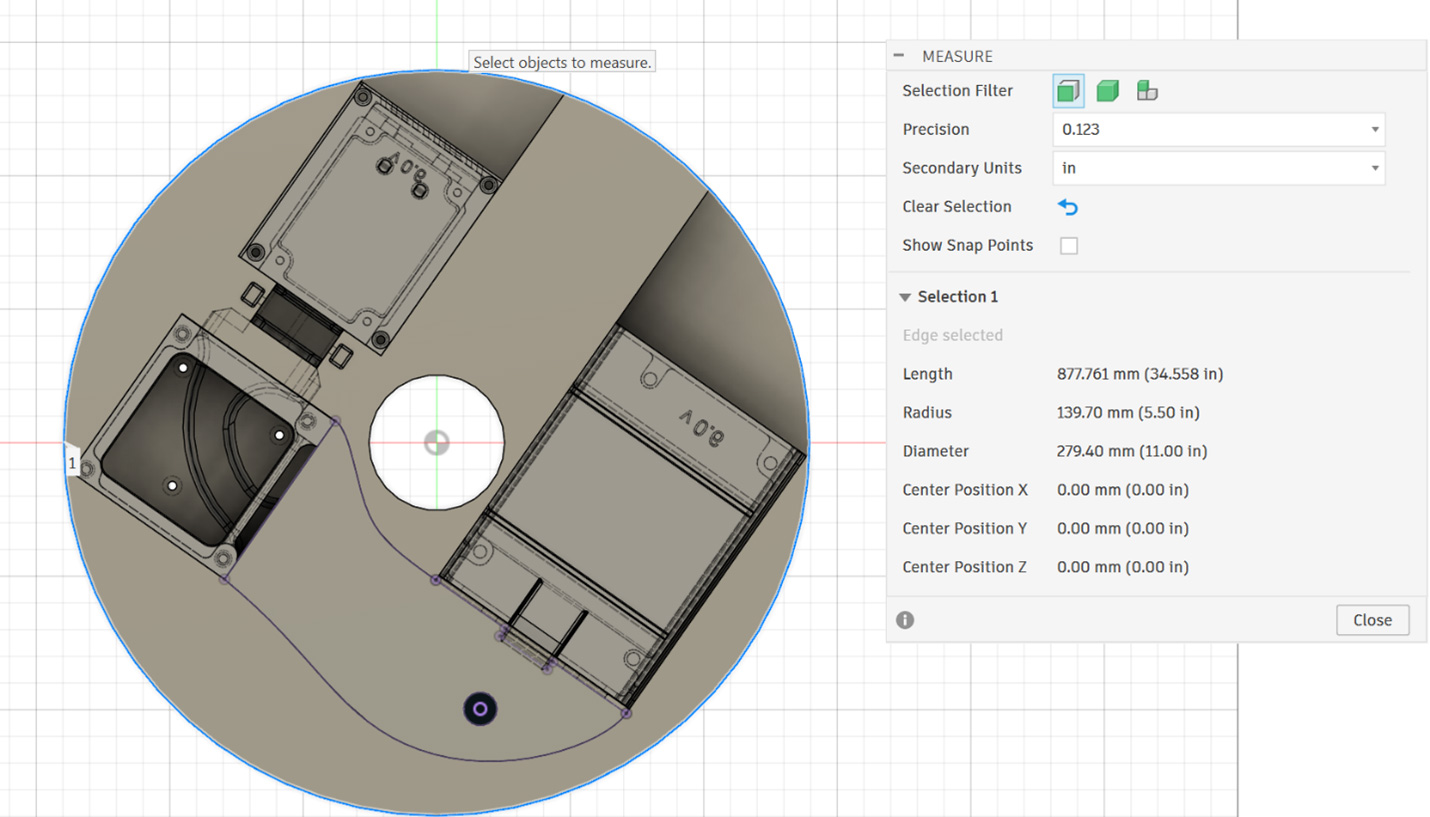
- Dimensions: 11" Outer Diameter 2" Center Diameter x 2" Thick
- Weight
- Estimated 2.43 lbs.
- Attachment Points:
- Ziplock attachment points around the circumference of the tracker
Communications and GPS Antennas
Integration Restrictions:
- DARPA will work with competitors to find optimal antenna placement per their design onsite at the competition
- Both Communication and GPS antennas will need to be mounted on the outside of the platform
- The GPS antenna will need a clear view of the sky
- Both Trackers include two antenna cables for GPS and communications
- Cable Lengths: 1m-2m
GPS Antenna:
- Shape:
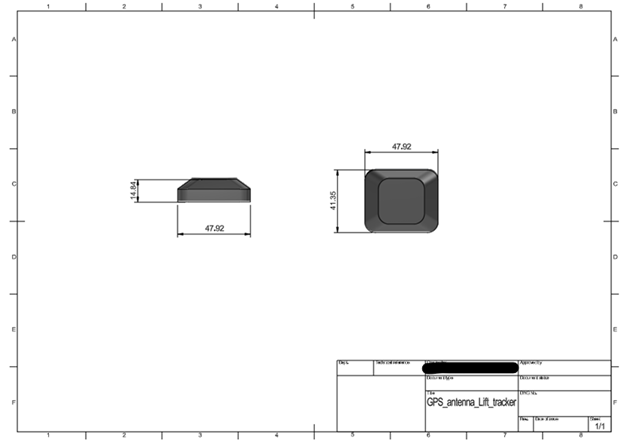
- Dimensions: 1.887" × 1.628" × 0.584" (47.92 x 41.35 x 14.84 millimeters)
- Attachment Points:
- Adhesive Pad
Communications Antenna:
- Shape as follows
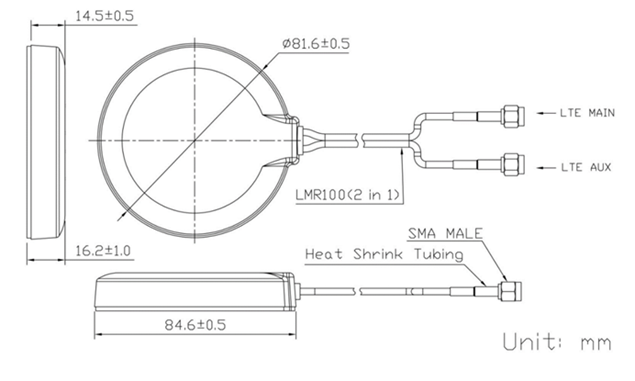
- Dimensions: 3.33" × 3.21" × 0.64" (84.6 × 81.6 × 16.2 mm)
- Diameter: 3.21" (81.6 mm)
- Attachment Points:
- Adhesive Pad
These dates were updated on Jan. 26, 2026, to reflect the latest schedule and deadlines for team deliverables.
Phase 1 | Launch
October 2025
- Special Notice publishing (Oct. 23): DARPA publishes a Special Notice to broadly announce the Lift Challenge and solicit innovative design concepts.
- Website launches (Oct. 23): DARPA publishes a Special Notice to broadly announce the Lift Challenge and solicit innovative design concepts.
- Rules and prize announcement (Oct. 23): Detailed draft rules and prize structure are announced, specifying objective and subjective judging criteria.
December 2025
- Online Q&A (Dec. 4): DARPA hosts online Q&A session(s) to address potential participants' questions and clarify challenge requirements.
- Contributor portal launches (Dec. 22): Competitors who require additional resources to enhance their drone designs may voluntarily use the portal to identify potential partners to meet their needs.
Phase 2 | Design and Build
January 2026
- Application window opens (Jan. 5): Formal application period opens, allowing interested teams to officially propose a design for the competition.
- FAA certification submission begins (Jan. 5): Teams begin to submit their Part 107 pilot certification.
- Draft concept paper submission (Jan. 31): Teams submit a draft concept paper outlining their proposed UAS design, technical approach, and key performance metrics for consistent engagement throughout design. | See template
March 2026
- Build progress picture submission (March 31): Teams to submit to DARPA progress picture(s) of the building of their aircraft to ensure consistent engagement.
Spring 2026
- FAA waiver approval: DARPA will distribute a copy of the approved waiver to all teams electronically following approval from the FAA.
May 2026
- Application window closes (May 1): Formal application period closes.
- Final concept paper submission (May 1): Aircraft design is complete, and analysis and information are ready for review. | See template
- FAA certification approval (May 1): All approved FAA Part 107 certifications must be submitted to DARPA by the application window close in Phase 2 prior to Formal Team Invitation to Compete.
- Flight test verification (May 15): Teams will submit a video demonstrating measurable progress toward a flight-ready system. | See guidance
Phase 3 | Competition and Evaluation
June 2026
- FAA certification approval (June 4): All approved FAA Part 107 certifications must be submitted to DARPA by the application window close in Phase 2 prior to Formal Team Invitation to Compete.
- Flight test verification (June 4): Teams will submit a video demonstrating measurable progress toward a flight-ready system. | See guidance
- Formal team invitation to compete (June 5): All teams have completed any pre-qualifications needed at this point for their design. DARPA will formally invite teams that have met all eligibility requirements and announce challenge schedule to include assigned flight windows.
August 2026
- Check-in, weigh-in, and inspection (Aug. 2): A comprehensive weigh-in and systems inspection process will take place to document the details of the aircraft.
- Challenge run through (Aug. 2-9): Teams will compete across multiple flight windows to achieve an eligible score. The highest score of the flight window will be submitted for review at the end of each flight window. The highest overall score for a team will be maintained throughout the competition.
- Challenge completion (Aug. 9): The challenge week concludes with an awards ceremony recognizing the top performers in both objective and subjective categories. A panel of DARPA experts will judge the final subjective winners for the competition.
Editor’s notes:
- On April 30, 2026, we updated the flight test verification milestone description to reflect added flexibility to submission requirements
- The FAA certification Flight Test Verification and deadlines (originally May 1 and 15, respectively) were updated to June 4 on May 20, 2026
Hot Topics | General and Eligibility
Aircraft Requirements | Payload Requirements | Flight Requirements
Scoring | Safety Requirements and FAA Regulations
Hot Topics
Q: How may I obtain the necessary FAA authorizations (including a Remote Pilot Certificate) while residing outside the United States?
A: A non-U.S. citizen can apply for and obtain an FAA Part 107 Remote Pilot Certificate in the United States. The FAA does not explicitly require U.S. citizenship for Part 107 certification. The key requirements are:
- Age: Be at least 16 years old.
- English proficiency: Be able to read, speak, write, and understand English.
- Passing the knowledge test: Pass the FAA's Part 107 knowledge test.
- Background check: Successfully complete a TSA background check.
Specific Considerations for Non-U.S. Citizens:
- TSA background check: While the regulations don't explicitly state that non-citizens are excluded, they must still pass a TSA security background check. The TSA assesses whether an individual poses a threat to aviation safety. The process for non-citizens can be more complex and may require providing additional documentation to prove identity and legal presence in the U.S. (if applicable).
- Legal presence in the U.S.: While not explicitly stated as a requirement to obtain the certificate, a non-US citizen may be requested to provide documentations for legal presence in the US.
- Compliance With all regulations: All operators, regardless of citizenship, must adhere to all Part 107 regulations.
Q: When can I apply for the DARPA Lift Challenge?
A: Team applications will tentatively open on Jan. 5, 2026.
Q: Are there rules about tools used to start the aircraft (e.g. dropping the starter and using a drill) and is there any limit to starting tools?
A: There is no rule about, nor any limits, to the starting or payload detachment tools a team may use.
Q: Are we allowed to bring multiple configurations of aerodynamic components for the same aircraft so it can be tailored for the prevailing conditions on the contest day?
A: Yes.
General and Eligibility
Q: Can you expand on what you're seeking for the flight test verification deliverable due May 15 and do you need both photos and video?
A: The May 15 flight test verification deliverable is intended to provide objective evidence of tangible progress toward a flight ready competition build. DARPA is not requiring a full or successful flight at this stage, nor is DARPA evaluating performance against competition metrics at this milestone.
Competitors may submit either photos or video (or both) demonstrating meaningful build progress. Acceptable evidence includes, but is not limited to:
- Integration and demonstration of a functional kill switch (hardware or software)
- Evidence of rudimentary flight controls or control authority (bench tests, ground tests, tethered tests)
- Power-on system checks and subsystem integration
- Ground testing or restrained / tethered flight testing
- Airframe assembly showing propulsion, power, and control integration
- Early command-and-control functionality demonstrations
Submissions should be sufficient to allow DARPA to determine that the team is actively progressing toward a compliant, flyable system consistent with competition rules and safety requirements. High production quality is not required; simple documentation captured via phone or handheld camera is acceptable.
This deliverable is intended as a build-progress checkpoint, not a pass/fail flight qualification.
Q: Can you clarify the eligibility requirements for a team? Can a government employee compete?
A: Please refer to Section 1.0 of the Draft Rules to review the updated eligibility requirements.
Q: Will DARPA have claim to our intellectual property when we win?
A: No, DARPA claims no Intellectual Property (IP) rights for any design taking part in the challenge.
Q: Do we have to expose our aircraft to other competitors?
A: Yes, this is a public event where your aircraft will be visible. Internal architecture and proprietary designs are at your discretion.
Q: How can an inventor with no resources get involved in the Challenge? Will DARPA fund any teams?
A: DARPA will not reimburse any costs, including those incurred in the design and development of the UAS. However, we plan on establishing a web portal to help competitors connect with businesses interested in contributing resources to support their design and development.
Q: Where will the portal for contributors be?
A: Read the contributor portal
Q: How will prize money be distributed among competitors?
A: As part of the application process, individual participants and teams must provide a Social Security number or Tax Identification Number. This information is necessary to receive the prize money. DARPA is not responsible for disbursement of prizes to individual team members other than the team representative/organization that was provided during the application process. Please refer to the draft rules for additional information.
Q: I am not a U.S. citizen or a permanent resident; can I still compete?
A: The eligibility requirements are outlined in Section 1.0 of the Draft Rules. Application is open to individuals who are U.S. citizens or U.S. permanent residents (Green Card holders), representing only U.S. entities (e.g., companies, academic institutions), and government employees (civilian and military). Non-U.S. individuals and organizations may participate but must have a U.S. sponsor as the applicant and team representative and cannot be citizens of countries on the Department of State’s International Traffic in Arms Regulations restricted list.
If you do not meet these requirements, you are encouraged to explore other opportunities within DARPA and are encouraged to visit the DARPAConnect portal. The portal is designed to help the research and development community understand how to collaborate with DARPA, fostering growth and partnerships with small businesses and education institutions new to the national security space. The portal includes resources designed to assist global participants interested in working with DARPA.
Q: Where will the course be located? How many days will the Challenge competition event last?
A: We will announce the location in early 2026. The competition is tentatively scheduled for a full week, but the schedule will be finalized after the team application window closes in May.
Q: Will there be limits on AI use during the challenge?
A: No, there are no limits, but please note neither AI nor autonomy are a focus of this particular challenge. You are welcome to utilize both as desired.
Q: Will there be food at the event?
A: Yes.
Q: Will competitors have to transport their equipment to the location of the competition?
A: Yes, so we recommend planning ahead on how you're going to easily transport your aircraft and corresponding equipment to the locations. We will share more about the course location in early 2026.
Q: Will there be internet access on-site during the competition?
A: Yes, there will be internet on site for competitors, as well as cellular. Furthermore, we are looking at ways to expand cellular service given the influx of users at the site during the event.
Requirements
Aircraft
Q: Are there any size constraints for the size of the vehicle?
A: Yes, your UAS must fit within the standard course dimensions, which will be announced soon. Please note that we have updated the course take off/ landing zone parameters to be two identical 5-foot radius circles, one for takeoff/landing and one for payload drop. To execute a successful, take off/ landing, the center body of the UAS must be within the designated zone.
Based on feedback, we are expanding to a 100-foot-wide lane.
Q: I didn't see any National Defense Authorization Act (NDAA) requirements, are they applicable here?
A: The team’s aircraft is not held to NDAA requirements. We are aware of the FCC public notice published on Dec. 22, 2025, and are investigating how this might impact team designs for this challenge.
Q: Are designs utilizing a short runway acceptable?
A: The UAS must execute vertical take-off and landing (VTOL). Short take-off and landing (STOL) designs will be ineligible.
Q: Is there a set number of awards, or will prizes be based on performance metrics or completion of the course? Additionally, if no team completes the course, will no prizes be issued?
A: Please refer to the Draft Rules and prize award categories for details.
Q: Can you provide feedback on my design?
A: To ensure the Lift Challenge is conducted in a fair and equitable manner, DARPA will not provide feedback on competitors’ designs prior to team selection to compete. Please sign up for our email newsletter for additional opportunities to learn more about the Lift Challenge in the coming weeks.
Q: Are we allowed to eject mass off the vehicle?
Yes, we are going to allow you to release nonstructural energy sources that have been expended, but they must have a slow decent and have high-resolution marking for easy retrieval.
Q: Can you jettison your aircraft in sections, or use parachutes?
A: Yes, you can use parachutes to assist with the aircraft landing in a safe and controlled manner, but the parachute must also complete the final loop, given that it is considered part of the aircraft weight (i.e. parachute can be used but not jettisoned).
Q: Does the aircraft have to be powered by thrust only? Can it have air foils and switch to a fixed wing design mid-flight?
A: We are not limiting aircraft design propulsion options and hope to see innovative designs that could include aircraft transformations. Keep in mind the course will be oval-shaped and geo-fenced. You must have controllability and the power to safely fly and land your aircraft. Therefore, transitioning or transforming your aircraft between vertical and horizontal flight is an option, but all parts must be located on the aircraft throughout the entire flight attempt.
Q: Can we have more than one drone entry so that we can try a heavier weight and still compete at the minimum 110 lb. payload if it doesn't complete the flight attempt?
A: A team can have two aircraft of the same design, complete your first flight attempt with 110 pounds. of payload to receive a qualifying score. Then, for another attempt, utilize your second aircraft to attempt a heavier payload-to-weight ratio number. Replicas and extra parts are permitted between flight attempts, as long as they do not change the fundamental design of your aircraft.
If you have two different aircraft designs, with one design intended to only get on the scoreboard with 110 pounds of payload and another design to try and max out the payload to weight ratio, you must register as two different teams. The team makeup can be the same, but each team is defined by a unique design.
Q: Are we allowed to use a multi-aircraft system?
A: Yes, a multi-aircraft system is allowed, but the total combined weight of all aircraft must be below 55 pounds. Furthermore, for the unloaded loop, all parts of the multi-aircraft system must complete the unloaded loop in coordination (i.e., you couldn’t detach a small aircraft and fly the last mile unloaded).
Payload
Q: If the payload does not touch the ground due to landing gear and falls a short distance after landing, is that an infraction?
A: No, as long as it’s done in a safe and controlled manner and resides within the 5-foot radius payload circle.
Q: Per draft rules, can you elaborate on what is meant by co-locating the payload at a single point on the UAS?
A: Considering the military use case example explained in the webinar, the intention is to not have the weight plates spread out in various locations. Competitors should have their payload all in the same place. Though the UAS does not need a single attachment point.
Q: Should I design my drone to lift a maximum amount of 220 pounds?
A: No – the competition is designed to incentivize increasing the payload-to-weight ratio. The 110 pounds payload is the minimum weight to receive a qualifying score. There is no maximum payload weight. The goal is to achieve the highest ratio, including a lighter aircraft or carrying a higher-weight payload.
Q: Do you allow releasing payload plates individually or must they be released together?
A: As long as you can release the plates safely, you can release them either way.
Q: Can we have the payload up on a stand for the aircraft to grab after takeoff or a human assisted connection of the craft to the payload?
A: You cannot use a stand to assist with payload attachment after takeoff and human assisted connection is allowed as long as it is done in a safe manner. We are investigating plywood or similar material for the weight plates to rest on rather than the ground.
Q: Will DARPA supply the weights for the competition or do we bring our own?
A: DARPA will supply all of the weights.
Flight
Q: Define the reasonable time to take-off and descend?
A: The unmanned aerial system (UAS) must maintain a consistent altitude of 150 feet (+/- 50 feet) above ground level (AGL) throughout the 5-nautical mile (nmi)-designated flight path, after the defined ascent period. Ascent and descent to/from 150-foot AGL must be achieved within 0.5 nmi from the designated takeoff/landing zone with the payload and within 0.2 nmi without payload. Altitude data will be monitored, and failure to meet these requirements may result in an infraction or disqualification. Descent can only begin after verbally alerting the lane coordinator.
Q: Can I have an observer at the end?
A: No, you cannot. You will have a Remote Pilot in Command (RPIC) at the starting end of the lane, as well as an optional RPIC Assistant, but no other team members will be allowed on the course due to safety concerns.
Q: Define the maximum distance from the aircraft to the Remote Pilot in Command (RPIC)?
A: Course details and dimensions will be released soon, but the RPIC and any assisting team member must remain at the end of the flight lane throughout the flight attempt.
Q: Will time be paused if manual removal of the payload is selected?
A: The clock starts with payload lift-off and ends with the aircraft safely landing in the designated zone and the power being cut. The clock will not be paused at any point during a flight attempt. Please note that 1 full nautical mile (nmi) must be completed following the payload drop.
Q: Does every part of the aircraft have to land inside the 5-foot radius landing zone or can parts of the system touch the ground outside of it?
A: The center body of the aircraft must be within the 5-foot radius landing zone, but other parts of the system can be touching the ground.
Q: Can a ground crew be located with the aircraft to start motors prior to launch?
A: Yes, when you move from the prep area to the actual launch area during your 90-minute window, you and your team can prepare it and start the aircraft there. Then you'll move back a safe distance, start executing your flight window, and take off.
Q: Is charging or refueling allowed when the aircraft lands after the first four nautical mile loop?
A: No, you're not allowed to add any more energy sources to complete the last nautical mile.
Q: Why is it 4 miles and 1 mile?
A: This was decided because of time – looking at viable speeds around this course and to accommodate as many competitors as possible in a roughly one-week period.
Q: Is the course going to be over flat ground or will there be obstacles?
A: The course will be over flat ground.
Q: When you say four times the initial weight, are you referring to the max takeoff weight or the max operating weight?
A: The target weight ratio of four times the initial weight refers specifically to the aircraft's maximum operating weight, and not its maximum takeoff weight. This design aims for a payload that is four times the weight of the aircraft. Although the FAA uses "maximum operating weight" which is relevant to regulations such as the 55-pound limit, it's crucial to understand that the maximum takeoff weight is contingent upon the takeoff configuration, including whether the payload is present at takeoff or is deployed via sling loading or other methods. Ultimately, the driving design factor is achieving a payload capacity four times the aircraft's weight.
Q: Regarding weather issues, what should we prepare for?
A: We are looking for aircraft that are somewhat robust. Therefore, when designing your aircraft, consider a takeoff in 10-, 15-, and 20-knot winds. If your design just doesn't work because of the wind conditions during your window and you're going to aim for the next window, you can forfeit that run.
Scoring
Q: What is DARPA's scoring criteria specifically for the subjective categories?
A: DARPA will leverage three of our aviation program managers to look for the best of breed in those categories. Winners of the objective categories can also win in the subjective categories as well. They are not exclusive.
Safety Requirements and FAA Regulations
Q: Is liability insurance required to participate in the DARPA Challenge?
A: No. DARPA and the FAA do not require competitors to carry liability insurance for participation in or leading up to the challenge, including insurance related to loss or damage to equipment, property, personal injury, or loss of life.
Q: Is liability insurance recommended?
A: Yes. While not mandatory, teams are strongly encouraged to obtain appropriate liability insurance to cover risks associated with flight operations, testing, transportation, and participation in the event.
Q: Will DARPA recommend third party vendors for liability coverage?
A: No. DARPA is not able to provide recommendations on liability coverage from third party vendors.
Q: Does DARPA assume liability for flight operations conducted by competitors?
A: No. All flight operations and related activities are conducted at the competitor’s own risk. DARPA does not assume any liability for loss or damage to equipment, property, personal injury, or loss of life. Teams remain fully responsible for complying with all applicable safety requirements and risk management practices.
Q: Why do teams need to abide by FAA regulations?
A: By competing in the DARPA Lift Challenge, flying your drone is no longer considered recreational because you are competing for prize money. Therefore, you must fly your drone under the FAA's Small UAS Rule (Part 107), which covers aircraft under 55 lbs. DARPA is submitting a request for an exemption (Authority: 49 U.S.C. § 44807 + 14 CFR Part 11). This exemption allows the FAA to grant relief from specific rules that normally prohibit civil operation of UAS > 55 lbs. or outside Part 107 to allow competitors to fly above 55 lbs. when carrying the payload.
Q: What is the process of becoming a certified drone pilot under Part 107?
A: Visit the following website for complete details: https://www.faa.gov/uas/commercial_operators/become_a_drone_pilot
In summary, you need to take a Knowledge Test and fulfill the eligibility requirements. To be eligible to get your Remote Pilot Certificate, you must be:
- At least 16 years old
- Able to read, write, speak, and understand English
- And be in a physical and mental condition to safely fly a UAS
You can study for the Knowledge Test by reviewing Knowledge Test Suggested Study Materials provided by the FAA.
Q: Once a team has a certified pilot, what's the process for registering a new, custom-built drone?
A: Registration costs $5 and is valid for 3 years. Learn more about registering your drone.
- Create an account and register your drone at FAADroneZone. Select "Fly UAS under Part 107."
- Once you've registered, mark your drone (PDF) with your registration number in case it gets lost or stolen.
- Your drone will be required to broadcast Remote ID information.
For more information on drone registration, visit How to Register Your Drone.
Q: What is Remote Identification (ID)?
A: Beginning Sept. 16, 2023, FAA added a new requirement for drones requiring a registration number to be able to broadcast Remote ID information. For this competition, teams should use a broadcast module and include that module’s serial number when registering your drone. We recommend watching our FAA Overview video for more on this topic.
Q: Are there design restrictions under Part 107?
A: Because Part 107 is a performance-based regulation, that means it's completely agnostic about the power plant and the energy for drones – i.e., there are generally no restrictions on how you power your device. However, if you’re using hazardous material, other laws outside of the FAA may apply.
Q: Once registered and designed, what are the basic flight rules for pilots?
A: The core rules are designed to keep drones safely separated from other aircraft and people on the ground. The pilot must:
- Keep the drone within their Visual Line of Sight (VLOS)
- Fly at or below 400 feet above the ground
- Generally, do not fly over people or moving vehicles
- Fly only during daylight hours, unless your drone has anti-collision lighting
Q: Where can teams legally fly?
A: Pilots will learn about airspace classification and restrictions while preparing for their Knowledge Test. Generally, the U.S. classifies airspace as uncontrolled (Class G) and controlled (Class B/C/D/E). Under Part 107, you can fly in uncontrolled airspace. If you need to fly in controlled airspace, you can request special authorization. One primary method to request this approval is through the Low Altitude Authorization and Notification Capability (LAANC) system. For a drone operating under Part 107, LAANC provides near real-time, automated approval to fly in controlled airspace.
Q: What should a pilot do if questioned by law enforcement while flying?
A: As a certified pilot, you are required to present your Remote Pilot Certificate and aircraft registration to any federal, state, or local official upon request. This is the standard procedure for any Part 107 flight. The same applies if you’re flying above 55 lbs. – you would also show them a copy of the 44807 exemption.
Q: What is the 44807 Exemption and how will I know when it’s been approved by the FAA?
A: Simply put, this exemption allows teams competing in the Lift Challenge to fly above 55 lbs. when they attach a payload under Part 107. Because DARPA will be submitting a robust safety case, the FAA can review it and grant the exemption to all competitors listed in the petition. Once granted, the foundation of your operation will still be Part 107, meaning all of those flight rules will carry over and your Part 107 pilot certificate will still be your license to fly. The exemption will simply give your team specific relief from the 55-pound weight limit, with added safety conditions. DARPA intends to submit the request in February, after which it will go under review by the FAA. The FAA estimates the approval will be granted this Spring and DARPA will notify competitors and share a copy once approved.
Q: Will DARPA provide the two trackers?
A: You are required to obtain the flight ID tracker that is required by the FAA under Part 107 and under the 44807. The other tracker will be furnished by DARPA. It will most likely be shaped like a weight plate and will also be a determined standard weight, such as 2.5 pounds or 5 pounds. That tracker will be part of the payload weight.
Q: Is there a speed limit for horizontal flight under the FAA’s Part 107? Does this limitation apply to this competition?
A: The Part 107 speed is limited to 100 mph. But this limitation does not apply to the competition because you will be operating under the FAA’s 44807 when the payload is added. The 44807 waiver will allow us to go above that 100 mph speed limit but will most likely not be attainable given the course layout.
This section outlines the official flight course dimensions, color-coded operational zones, and the mandatory procedures associated with each boundary. All teams are required to understand and adhere to these rules during their scoring attempts.
The flight lane is a defined corridor measuring 100 feet wide by 1,100 feet long. A multi-tiered zone system will be used to provide real-time feedback and enforce safety protocols.
Zone Definitions and Required Actions
Green Zone (Safe Flight Corridor)
- Dimensions: A 60-foot-wide by 1,060-foot-long corridor centered within the flight lane.
- Description: This is the designated safe and optimal flight path. Operations within this zone are considered nominal.
Yellow Zone (Warning Buffer)
- Dimensions: A 20-foot buffer area located along the inside edges of the flight lane.
- Description: Entry into the Yellow Zone indicates that the aircraft is approaching the lane boundary. A visual warning will be triggered on the Remote Pilot in Command (RPIC) display.
- Required Action: None
Red Zone (Run Termination)
- Dimensions: The area beginning 35 feet outside of the primary flight lane boundary.
- Description: Entry into the Red Zone constitutes a boundary excursion and results in the immediate termination of the scoring attempt.
- Required action: The scoring attempt for that run is officially concluded. The pilot must safely maneuver the aircraft back into the lane and return to the starting position. Subject to remaining mission time, the team may refuel, re-weigh, and begin a new attempt.
Black Zone (Geofence Breach)
- Dimensions: The entire area beyond the site's established geofence perimeter (indicated by a dotted line on the RPIC display).
- Description: A Geofence Breach is a critical safety event. It indicates the aircraft has left the designated operational area. The following tiered emergency protocol is mandatory.
Required Action Protocol
- Immediate correction: The pilot's primary and immediate responsibility is to attempt to guide the aircraft back inside the flight box.
- Land immediately: If the aircraft is unresponsive to corrective inputs, the pilot must land the aircraft immediately, regardless of its position.
- Activate kill switch: If the aircraft is unresponsive, cannot be landed safely, and continues to travel away from the operational area, the pilot must activate the kill switch as the final resort to ensure site containment.
This graphic shows Lift Challenge lane boundaries as described in The Competition Course Section. Source: DARPA
Contributor Portal
Find U.S.-based companies interested in supporting Lift Challenge competitors.
Disclaimers
- The portal is intended solely to facilitate connections between companies and competitors who may require additional resources
- Information provided by companies is submitted voluntarily. DARPA does not endorse, certify, or assume responsibility for the accuracy, completeness, or validity of any company-provided information. Competitors are encouraged to independently verify services listed on this page.
- Using the resources offered by Contributors is not a requirement for competing in the Challenge. Competitors are free to acquire resources from other companies for their designs.
Concept Papers
- Final
Blank template | Example paper
- Draft
Blank template | Example paper