Securing America’s Microelectronics Future
DARPA’s NGMM Summit charts progress toward strengthening U.S. technological leadership through 3D heterogeneous integration.
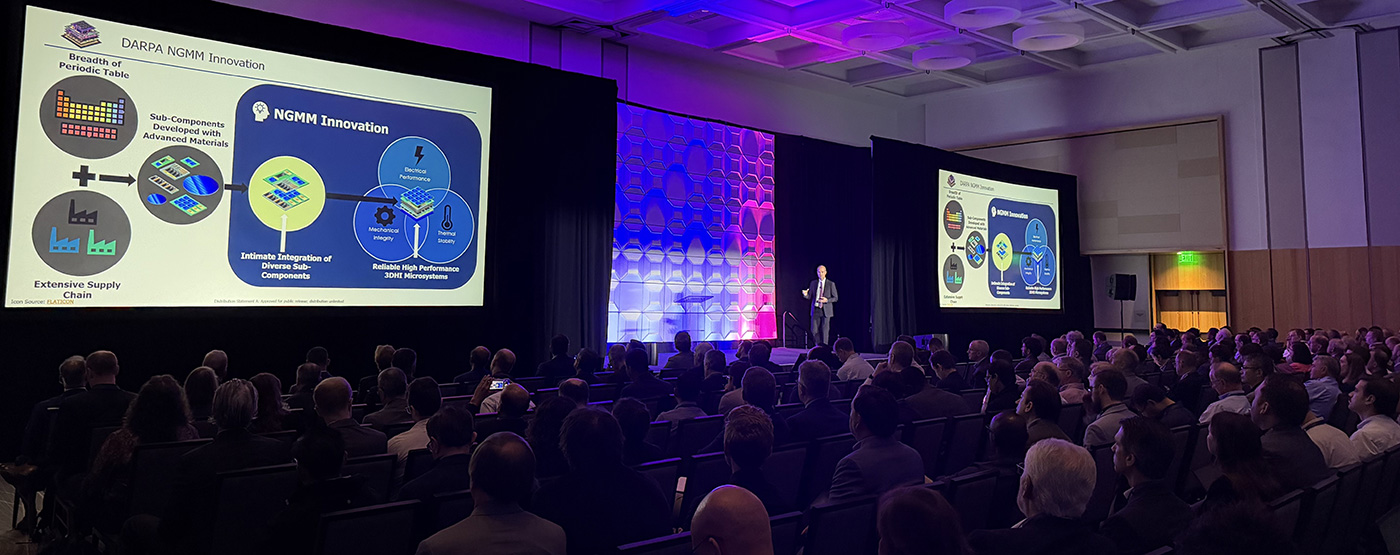
In the fall of 2025, DARPA’s Microsystems Technology Office (MTO) convened over 400 leaders from across industry, academia, government, and beyond for the first-ever Next-Generation Microelectronics Manufacturing (NGMM) Summit in Austin, Texas.
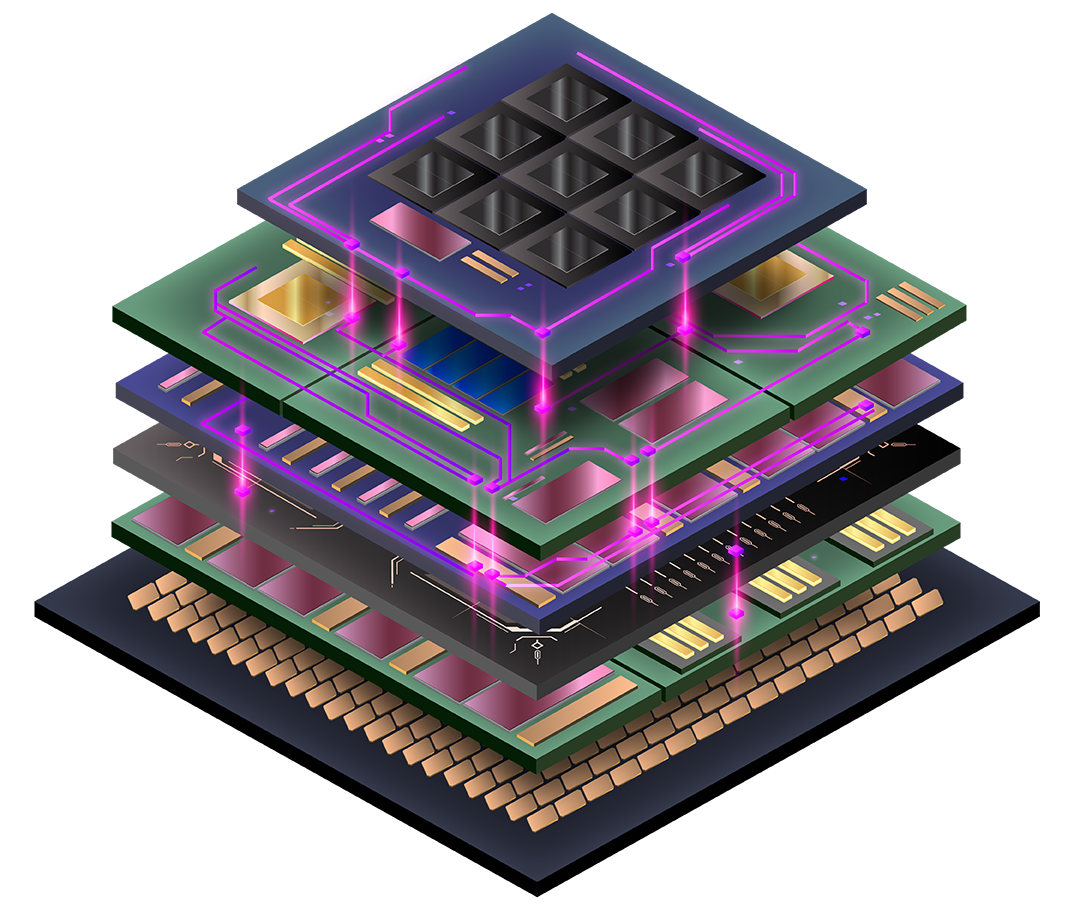
The two-day event marked a milestone for the NGMM program, DARPA’s flagship effort to establish the nation’s first self-sustaining, domestic manufacturing center for the next frontier in microelectronics: three-dimensional heterogeneous integration (3DHI) using mixed materials.
Through keynotes, technical talks, and panel discussions, Summit participants explored NGMM’s vision and early progress toward enabling accessible prototyping and pilot production of next-generation microelectronic systems. Speakers emphasized how 3DHI can unlock step-change gains in performance, size, weight, power efficiency, and bandwidth critical to future defense and dual-use applications.
Updates on facility build-out and process development, along with discussions of early engagement opportunities, highlighted how NGMM is moving from concept toward execution. DARPA’s partnership with The University of Texas at Austin and its Texas Institute for Electronics (TIE), which is developing the physical NGMM Center, was a focal point throughout the Summit, underscoring the scale of collaboration required to realize these ambitions.

The NGMM Summit provided a forum for candid discussion about the strategic importance of advanced microelectronics to U.S. economic competitiveness and national security – particularly as traditional, silicon-centric approaches near their physical and economic limits.
Speakers and attendees returned repeatedly to the national-security stakes of the investment, from reducing reliance on fragile global supply chains to ensuring future warfighters have access to technologies supported by orders-of-magnitude superior microelectronics.
Discussions on design ecosystems, workforce development, and community engagement reinforced how NGMM aims to work with a range of stakeholders while accelerating innovation at scale.
All told, the NGMM Summit showcased growing momentum around a shared objective: building a resilient, sustainable U.S. microelectronics manufacturing ecosystem capable of meeting the complex demands of future systems.