Breadcrumb

  1. Home
  2. Research
  3. Programs
  4. Protean

Protean

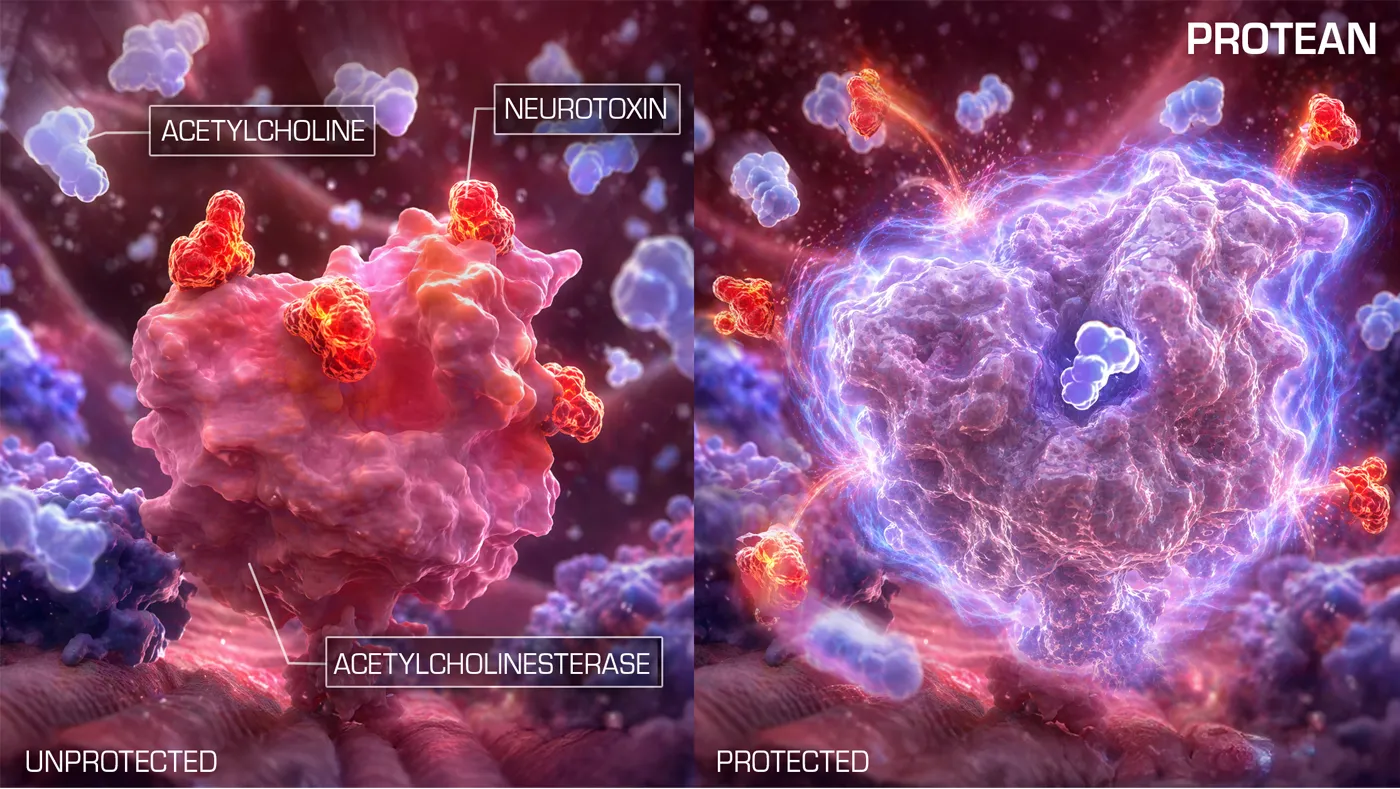
Protean alters how our body's critical proteins interact with toxins. Instead of fighting the agent after it takes hold, our approach renders the biological target invisible, causing the threat to harmlessly bounce off.
The Future of Chemical Defense is Invisible: The modern battlefield requires agility, yet defending against chemical attacks has historically meant relying on bulky, movement-restricting gear and reactive treatments. DARPA's Protean program is breaking this cycle. We are moving beyond the physical limitations of traditional protective suits by developing a proactive medicine taken before exposure. By targeting the root cause of chemical poisoning at the molecular level, Protean alters how our body's critical proteins interact with toxins. Instead of fighting the agent after it takes hold, our approach renders the biological target invisible, causing the threat to harmlessly bounce off. This AI-driven, revolutionary framework aims to create a "universal key" against novel chemical threats, empowering warfighters to complete their missions safely without the burden of legacy protective equipment. | Download Source: DARPA | Alissa Eckert, MSMI

How to develop medical countermeasures against chemical threats

Imagine a future battlefield where chemical weapons are rendered ineffective, not by bulky protective gear alone, but by prophylactic medicines that neutralize the threat at the molecular level.

The Protean program is working to achieve this vision by fundamentally changing how we develop medical countermeasures against chemical threats. Current approaches focus on treating the symptoms of exposure or attempting to intercept the chemical before it reaches its target. 

Protean, however, aims to stop the poisoning at its source by engineering resilience into the very proteins that are targeted by these chemicals. This groundbreaking approach involves mapping the rapid, dynamic movements of key proteins in the body and designing interventions that restore their normal function even in the presence of toxic agents.

 

Contact