Summary
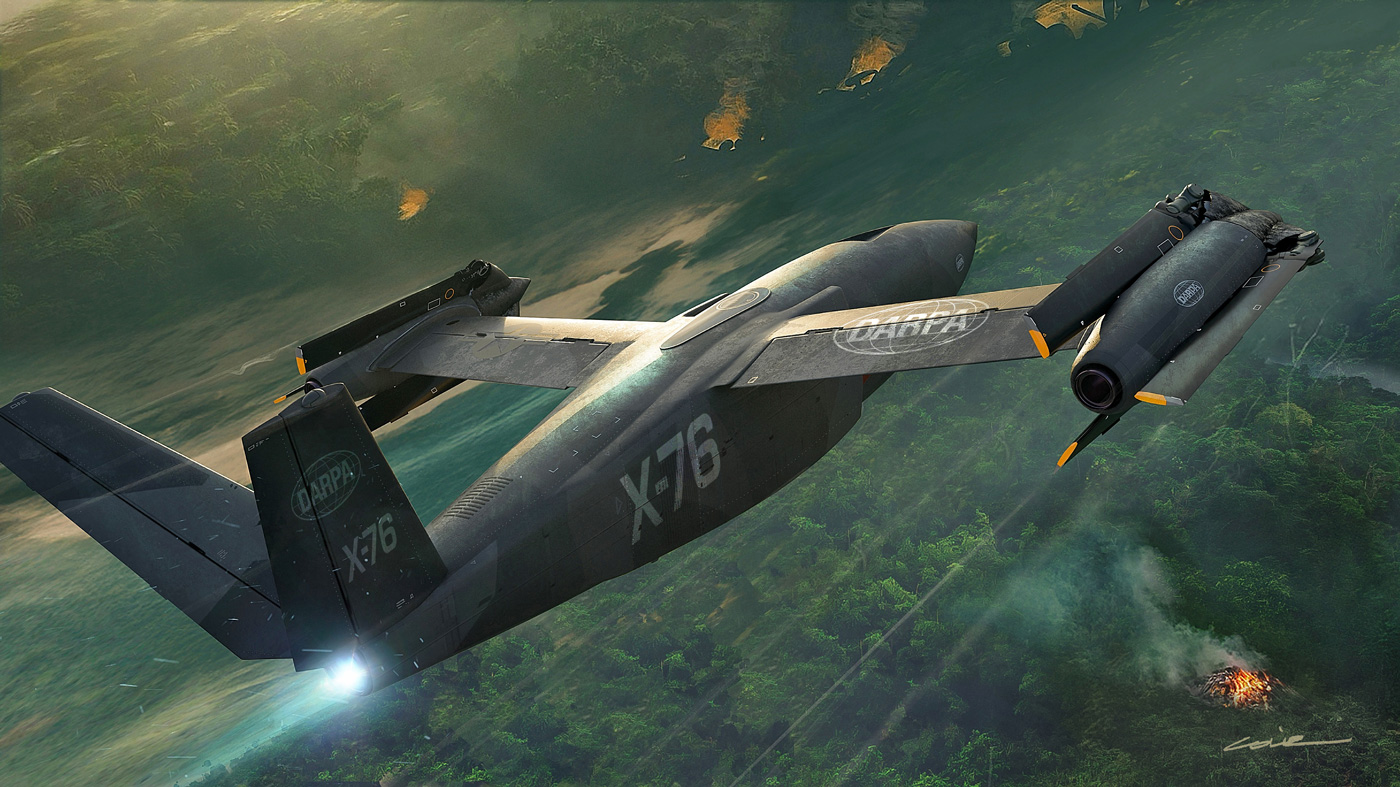
The Speed and Runway Independent Technologies (SPRINT) project is a joint DARPA/U.S. Special Operations Command effort that aims to design, build, and fly an X-plane to demonstrate the key technologies and integrated concepts that enable a transformational combination of aircraft speed and runway independence.
The SPRINT X-plane is intended to be a proof-of-concept technology demonstrator and its flight test program seeks to validate enabling technologies and integrated concepts that can be scaled to different size military aircraft. The goal of the program is to provide these aircraft with the ability to cruise at speeds from 400 to 450 knots at relevant altitudes and hover in austere environments from unprepared surfaces.
The SPRINT program entered Phase 1 on Nov. 1, 2023. In May 2024, two performers – Aurora Flight Sciences and Bell Textron, Inc. – were awarded contracts for Phase 1B. Performers had approximately one year to complete preliminary design work for their aircraft.
In June 2025, one performer – Bell Textron, Inc. – was awarded a contract for Phases 2 and 3. These phases will complete design, build, and test of a SPRINT X-plane.
Office
Tactical Technology Office