


The goal of the SIGMA program, which began in 2014, was to develop and test low-cost, high-efficiency radiation sensors that detect gamma and neutron radiation and to network them via smartphones. This would create a distributed detection network to provide city, state, and federal officials with real-time awareness of potential nuclear and radiological threats such as dirty bombs, which combine conventional explosives and radioactive material to increase their disruptive potential.
A capstone demonstration in December 2019 with the Port Authority of New York and New Jersey (Port Authority) culminated a five-year effort to develop and deploy an automated, high-performance, networked radiation detection capability for counterterrorism and continuous city-to-region scale radiological and nuclear threat monitoring. The networked SIGMA system provides minute-to-minute situational awareness of nuclear threats and is in use by the Port Authority, adding an additional layer of protection for critical transportation infrastructure in New York City and northern New Jersey.
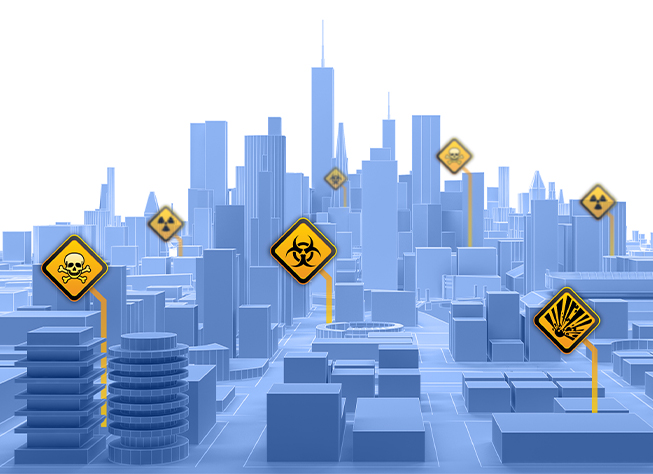
Building on the successful DARPA-Port Authority engagement, DARPA launched the SIGMA+ program in 2018 to expand the networked system beyond nuclear and radiological threats to include development of:
- Advanced chemical, biological, and explosive sensors
- Integrated vehicle designs
- Real-time monitoring networks
- Advanced analytics for threat detection and interdiction
In 2023 the expanded SIGMA+ capabilities transitioned to operational use by the Port Authority and to law enforcement entities other U.S. cities.
Redefining Possible
Since 1958, DARPA has been an engine of innovation serving national defense and the U.S. warfighter.