


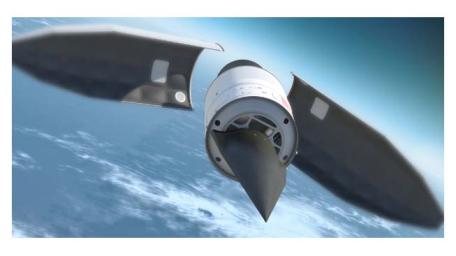
DARPA’s Falcon Hypersonic Technology Vehicle 2 (HTV-2) program was a multiyear research and development effort to increase the technical knowledge base and advance critical technologies to make long-duration hypersonic flight a reality.
Falcon HTV-2 is an unmanned, rocket-launched, maneuverable aircraft that glides through the Earth’s atmosphere at incredibly fast speeds — Mach 20 (approximately 13,000 miles per hour).
At HTV-2 speeds, flight time between New York City and Los Angeles would be less than 12 minutes.
The HTV-2 vehicle is a “data truck” with numerous sensors that collect data in an uncertain operating envelope.
Mastery of three key technical challenges stands between the DoD and long-duration hypersonic flight:
- Aerodynamics
- Aerothermal effects
- Critical guidance, navigation, and control
HTV-2 flew its maiden flight on April 22, 2010, collecting nine minutes of unique flight data, including 139 seconds of Mach 22 to Mach 17 aerodynamic data.
The booster system Falcon 9 was another historical aspect of the program. In 2011, it was certified to launch DoD’s highly valuable payloads – the first commercial vendor for such a service.
This marked an important first step away from DoD’s slow-paced, expensive launch methods towards a future of nimble access to space. SpaceX developed the technology, and DARPA was the company’s first customer, providing access to launch from a DoD site.
In a reminder of the difficulty and risks of DARPA-hard project, the program team harvested only nine minutes of data before losing contact with the vehicle.
Redefining Possible
Since 1958, DARPA has been an engine of innovation serving national defense and the U.S. warfighter.